Updates on the US Migration Puzzle

The migration puzzle is that while Americans tend to think of themselves as a country where migration is commonplace, the actual rate of migration has been falling since about 1980. Raven Molloy, Christopher L. Smith, and Abigail Wozniak provide a nice overview of the changes in "Internal Migration in the United States" in the Summer 2011 issue of the  Journal of Economic Perspectives. (Full disclosure: I've been holding down the Managing Editor job at JEP since the tail end of the Reagan administration. I posted about the Molloy, Smith, and Wozniak article here, soon after it was published. ) Since then, there are a couple of recent developments: some new evidence that the migration rate may be turning up a bit, and some new explanations for why it declined.


William Frey presents some recent evidence on the within-the-U.S. migration rate in a short overview article in the Milken Institute Review, July 2013. He writes: "In 2011-12, 14 states (most of
them in the Sun Belt) showed bigger gains than the previous year. Phoenix picked up 37,000 intranational migrants, compared with just 4,000 the year before. At the same time, 27 states, most in the Snow Belt, were losing migrants at an accelerated pace. Metro New York, for example, lost 128,000, compared to 99,000 in the prior 12 months. To be sure, Snow Belt to Sun Belt flows are
not close to their peaks, or even to normal levels. In 2005-6 New York lost 290,000 migrants,
while Phoenix gained a tad less than 100,000. But there is clearly a thaw."


Explaining the decline in within-U.S. migration since the late 1980s or early 1990s migration has proven difficult. It's easy to suggest possible reasons. For example, perhaps as the average age of America's population rises, people become less likely to move. Or perhaps the increase in two-earner couples makes people less likely to move. But these kinds of explanations can easily be tested against the data: for example, by looking at areas that have more or less elderly people, or areas that have bigger or smaller shares of two-earner couples, and comparing mobility rates. As Malloy, Smith and Wozniak pointed out in their 2011 JEP article: "Migration rates have fallen for most distances, demographic and socioeconomic groups, and geographic areas. The widespread nature of the decrease suggests that the drop in mobility is not related to demographics, income, employment, labor force participation, or homeownership."

However, Greg Kaplan and Sam Schulhofer-Wohl have written "Understanding the Long-Run Decline in Interstate Migration ," published as Working Paper 697 by the Minneapolis Federal Reserve. Their paper is technical research economics, and thus not an easy read for the uninitiated, but the basic findings can be explained easily enough. They write: 

"We show that micro data rule out many popular explanations for this change [of lower migration rates], such as aging of the population or changes in the number of two-earner households. But the data do support two novel theories. The rst theory is that labor markets around the country have become more similar in the returns they o er to particular skills, so workers need not move to a particular place to maximize the return on their idiosyncratic abilities. The second theory is that better information--due to both information technology and falling travel costs--has made locations less of an experience good, reducing the need for young people to experiment with living in di erent places. We build a model that makes these ideas precise and show that a plausibly calibrated version is consistent with cross-sectional and time-series patterns." 

As Kaplan and Schulhofer-Wohl readily admit, just how much of the change in migration is explained by these factors is not yet clear: it could be as little as one-third, or as much as all of it. I'm sure future research will try to narrow this down. They also provide a useful compact explanation of why the level of migration, and the reasons why it slowed down, matter for labor markets and policy-makers (in what follows, citations are omitted).

"Many policymakers have worried that the decline in migration heralds a less-flexible economy where workers cannot move to places with good jobs. In such an economy, the labor market might adjust more slowly to shocks, potentially prolonging recessions and reducing growth. Low migration has thus been proposed as an explanation for the slow recovery from the 2007-'08 financial crisis. But the causes of decreased migration that we identify suggest that the economy may not be less flexible after all. Rather, low migration means that workers either do not need to move to obtain good jobs or have better information about their opportunities. In either case, the appropriate policy response may diff er from the appropriate response to a decrease in workers' ability to move. Thus, understanding the causes of the decline in gross migration is an important goal for economists."

Happy Blogiversary!

According to my first ever post, it's been a year since I started my blog. Back then I wasn't dedicated enough and used a previous Tumblr account so I only did 7 posts in 2012, a bit of a disappoint to think about and even worse to look at. I didn't dedicated myself to it until February 2013 but we shall call today the blog anniversary as it is when the blog first started!

I'm super proud of how far I've come in this amount of time, more so since February! I started this blog to keep me motivated when I was out of work and it has helped me a lot since then. I feel a lot more confident in researching, writing and photographing. I've met some seriously wonderful people through it, both online and in person and I hope this carries on as I love to form relationships with bloggers! I have also been fortunate to work with some amazing brands so far in my blogging experience which I never thought possible as when I started it was mainly just to share what things I love!

I can't thank my readers and followers enough for following what I do. Sometimes I feel a mish-mash is going on and then I realise, I'm doing what I love and writing about what I want to!
Thank you for following me, and if you don't follow then thank you for just stopping by to have a read and leave a comment. Every little comment keeps me motivated to share more with you all!

I apologise that I won't be doing a giveaway to coinside with the blogiversary but as you may know I'm taking part in a spending ban. I may do one when my spending ban is over or wait until I've reached 100 followers as most bloggers do, but I promise it'll be a very quirky one with products and brands that I love and use often as a thank you to my readers!

If you have a suggestion of anything you would like to see more of I would love to hear from you :)
Thanks again for reading and following, here's to another positive year!


Dodd-Frank Plods Ahead, Three Years Later

Three years ago, the Wall Street Reform and Consumer Protection Act, commonly known as the Dodd-Frank act, was signed into law by President Obama. The legislation took a peculiar form: rather than Congress actually writing a new set of rules and regulations, the law involved a massive set of requirements that regulatory agencies write new rules.

The law firm of Davis Polk and Wardwell has been publishing regular progress reports on how the rule-making is proceeding. By their count, the legislation involved 398 new rule-making requirements. According to the third-anniversary report, the deadlines for writing 279 of those rules have been reached, but only 107 rules have been completed. Of the 172  rules where deadlines have now been missed, regulators have not yet submitted proposals for 64 of them. By their count, so far there are 15 million words worth of regulations to implement the 898-page legislation, and the count is rising.


In some sense, this slow pace of producing final rules is no surprise, as I've discussed earlier here. Writing a rule involves a legally defined process of proposals, comments, revised proposals, and so on. Writing several dozen new major rules to govern financial institutions and markets would be a major undertaking: writing several hundred new rules is a gargantuan task. Of course, each rule is contested between those of differing views. In a real sense, Dodd-Frank was not actually about Congress enacting financial reform, but rather about admitting that Congress doesn't have enough knowledge to enact financial reform--and handing off the task to others.
That said, how are the reforms proceeding? Daniel Tarullo of the Fed Board of Governors gave a talk on the subject in May. Here's how he listed the positives, and what remains to be done. On the positive side:

"First, the basic prudential framework for banking organizations is being considerably strengthened, both internationally and domestically. Central to this effort are the Basel III changes to capital standards, which create a new requirement for a minimum common equity capital ratio.... Second, a series of reforms have been targeted at the larger financial firms that are more likely to be of systemic importance. ... The governing principle for this new set of rules is that larger institutions should be subject to more exacting regulatory and supervisory requirements, which should become progressively stricter as the systemic importance of a firm increases. ... A third set of reforms has been aimed at strengthening financial markets generally, without regard to the status of relevant market actors as regulated or systemically important. The greatest focus ... has been on making derivatives markets safer through requiring central clearing for derivatives that can be standardized and creating margin requirements for derivatives that continue to be written and traded outside of central clearing facilities."

As Tarullo points out, a number of these rules are still being implemented. On the other side, here are his limitations and shortcomings. For example, he writes that the new capital standards for banks are lower than he would prefer, and do not fully address the "too-big-to-fail" problem. He also emphasizes: "Most importantly, relatively little has been done to change the structure of wholesale funding markets so as to make them less susceptible to damaging runs. ... [S]ignificant continuing vulnerability remains, particularly in those funding channels that can be grouped under the heading of securities financing transactions." In particular, Tarullo mentions "[r]epo, reverse repo, securities lending and borrowing, and securities margin lending." 

For a more detailed discussion of shortcomings of Dodd-Frank, I recommend "Financial Stability Monitoring" by Tobias Adrian, Daniel Covitz, and Nellie Liang at the Fed, written as Finance and Economics Discussion Series 2013-21. For example, when Congress requires that rules are written for tighter regulation of depository institutions, they create incentives for larger parts of the financial sector to move out of the regulated sector and to what is often known as the "shadow banking" sector. These are financial entities that accept investments that can be withdrawn in the short-run, but often invest in financial securities that pay off over the long run--which as we have learned can set the stage for a financial crisis if many investors try to sell off these investments at the same time. As another example, when Congress attempts to set rules that limit what regulators can do when a financial institution is in trouble, it risks making a future financial crisis even more severe. They also emphasize Tarullo's point that the Dodd-Frank Act "does not address structural problems in wholesale short-term funding markets, such as the susceptibility of money market funds to investor runs or the inherent fragility of repo markets."

It is remarkable and depressing to me that three years after the passage of this legislation, and more than four years after U.S. financial markets nearly melted down in late 2008 and early 2009, the issues of how to reform the financial sector remain so fluid and unresolved.


NSPA Beauty Rituals | Review

Last month I was kindly asked to test and share my thoughts on a few products from NSPA Beauty Rituals range.

NSPA Beauty Rituals is a collection of dermatologically approved and Paraben free facial beauty products created and used by experts at Nirvana Spa, the number 1 Day Spa in the UK. What's even better is that NSPA are against animal testing and all products are made in the UK!
The collection is categorised into a 4-step skincare routine that you can create to your own taste:
Step 1 Cleanse; to draw out impurities, remove makeup and clarify skin
Step 2 Exfoliate; to buff away dull skin cells, refine pores and tone skin
Step 3 Treat; to condition and replenish tired skin
Step 4 Moisturise; to restore and nourish thirsty skin

I love the idea of the 4-step routine as it allows you to mix and match certain products depending on your skin type and it's also great for anyone who is a bit baffled and overwhelmed with skincare products, I am sadly one of those people!
There is a lovely choice of products for each category, sections 1, 2 and 3 each have four products to choose from and section 4 has seven various creams and moisturisers.

NSPA Beauty Rituals range is available to buy exclusively at Asda stores nationwide in the beauty/skincare isle and online at Asda.com. The price of the range is very reasonable, much like most Supermarket brands, with products priced between £4.50 and £7 and with various offers on you can save even more.
I love the packaging of the NSPA Beauty Rituals range. With sleek, mainly white packaging and clear typography both front and back. Each product tells you which step they are in, with a bold 123 or 4 on the front of the product in corresponding colours.


Step 1 Cleanse: Revitalising Vitamin Toning Mist*, 150ml | £3.00
Directions of use: After cleansing, hold 20–30cm away and spritz over face. Ideal for using throughout the day under or over make-up for a quick and cooling skin boost.
It smells lovely and subtle, slightly of the witch hazel and a little floral too. I only need about 1-2 small spritz to freshen my face. It feels very soothing and refreshing, perfect during the morning skincare routine and as a boost on a hot Summers.
The Ginseng and Vitamin E in this are said to help towards moisturising and brightening the skin, however I can't say I've noticed much brightening. My skin does feel moisturised after toning.
The Revitalising Vitamin Toning Mist is suitable for all skin types and for £3.00 it's worth getting even just to try!


Step 2 Exoliate: Brightening Detox Scrub*, 125ml | RRP £4.50
Directions of use: Use 2-3 times per week, after cleansing apply to damp skin and massage in circular motions. Rinse well with warm water.
The texture surprised me at first, a light and fluffy foam-like consistency; it spreads across the face very softly and felt moisturising. The texture of the scrub ones massaging into the skin was very interesting; the micro exfoliation beads were gentle, unlike many scrubs I have tried that feel too abrasive like sandpaper and are large and gritty. These exfoliated my skin well and actually made my skin feel soft and clean. The scent is very light, which is a plus for me as I don't like overpowering scents.
I've been using this for a good few weeks and it is turning into my new favourite scrub. Overall it does what it says on the tube; removes dead skin cells, leaves skin clearer and softer. At just £4.50 I definitely recommend this scrub!


Step 3 Treat: Replenishing Moisture Mask*, 125ml | £5.00
Directions of use: Use 2-3 times per week. After Steps 1 & 2, apply an even layer to a clean face and neck. Leave for 10–20 minutes then gently wipe away any excess using cotton pads soaked with warm water.
A pale pink, thick and creamy textured cream mask. It smells faintly of floral notes, very much like spa products. The moisture mask spreads evenly across the face, I apply a generous covering across dry areas such as my nose and cheek bones for extra moisture. It instantly feels soothing and not uncomfortable at all, I could easily keep this mask on until all of it has been soaked into my skin. I've used this a handful of times over the past two weeks and my skin feels a lot softer and smoother. My dry bits instantly feel more moisturised and my skin doesn't seem greasy or overly shiny.
For £5.00 it's a definite must have and bargain even just to try!


Step 4 Moisturise: Nourishing Eye & Lip Treatment*, 15ml | RRP £3.00
Directions of use: Use daily, apply a small amount to the eye area by dabbing with your finger. It can also be used on lips simply by smoothing over.
This lovely nourishing treatment comes in a beauty bag friendly sized tube so is perfect for on the go!
It contains ginseng, caffeine and vitamin E to brighten and reduce puffiness and dark circles to the eyes.
The texture is creamy with a slight pearl sheen, after blending and dabbing to the eyes and lips it soaks in well and is incredibly soft and light feeling. It probably wouldn't be best for those who need a thicker moisturiser but it does the job for me!
Personally, I love the scent of this nourishing treatment. It has a soft yet noticeable smell of jojoba oil and cranberry extract which I find very refreshing.
I've been using daily for a few weeks and I'm really loving it, I haven't noticed much of a difference to the puffiness of my eyes but my under-eyes and lips feel very soft.

Have you tried any of the NSPA Beauty Rituals 4-step skincare routine products?
Have you tried any other NSPA products from bath to hair?
What do you think of NSPA?


The Fed Laughter Index

From time to time, I've posted figures to help illustrate the sharpness and severity of the financial and economic shocks that hit the U.S. economy starting in 2007 and lasting into 2009. Some examples (here and here) included interest rate spreads, net lending by the financial sector, the housing price bubble, inflows of international capital, and the like. But here's an offbeat measure: in the transcripts of the meetings of the Federal Open Market Committee, which is at the center of making decisions about monetary policy, how many times does the transcript note that laughter occurred?


During the tail end of the Greenspan years, 10-30 laughs per meeting was about the norm. (Just to be clear, this humor is typically the sort of thing that would only provide chuckles to aficionados of monetary policy who are shut in a room together.) When Bernanke arrives, the laughter level rises up into the range of 70-80 laughs per meeting. But when the first stirrings of the financial crisis hit in late 2007, there are a few meetings with no almost no laughter at all.

The data only go through early 2008, because minutes of FOMC meetings are only released after a five-year lag. The figure is taken from a briefing book put together by the Stanford Institute for Economic Policy Research for their annual "summit" meeting last spring, and is based on data from Bianco Research. 

Calling All Business Owners!


The City of Monrovia will be hosting a Business Seminar Series on the Affordable Healthcare Act.

It will discuss in depth how the Affordable Healthcare Act will affect you and your business.

Our featured speaker is, George N. Papacalos, the Regional Sales Executive for Kaiser Permanente. 

•             Wednesday, August 7, 2013: 11:30 am – 1:00 pm

•             Monrovia Public Library, 321 S. Myrtle Avenue, Monrovia, CA

•             Hosted lunch provided by CafĂ© Mundial

•             RSVP by August 5th : Korrine  Ramirez; 626.358.1159 or kr@monroviacc.com.

We would love for you to join us

False Nails Sets

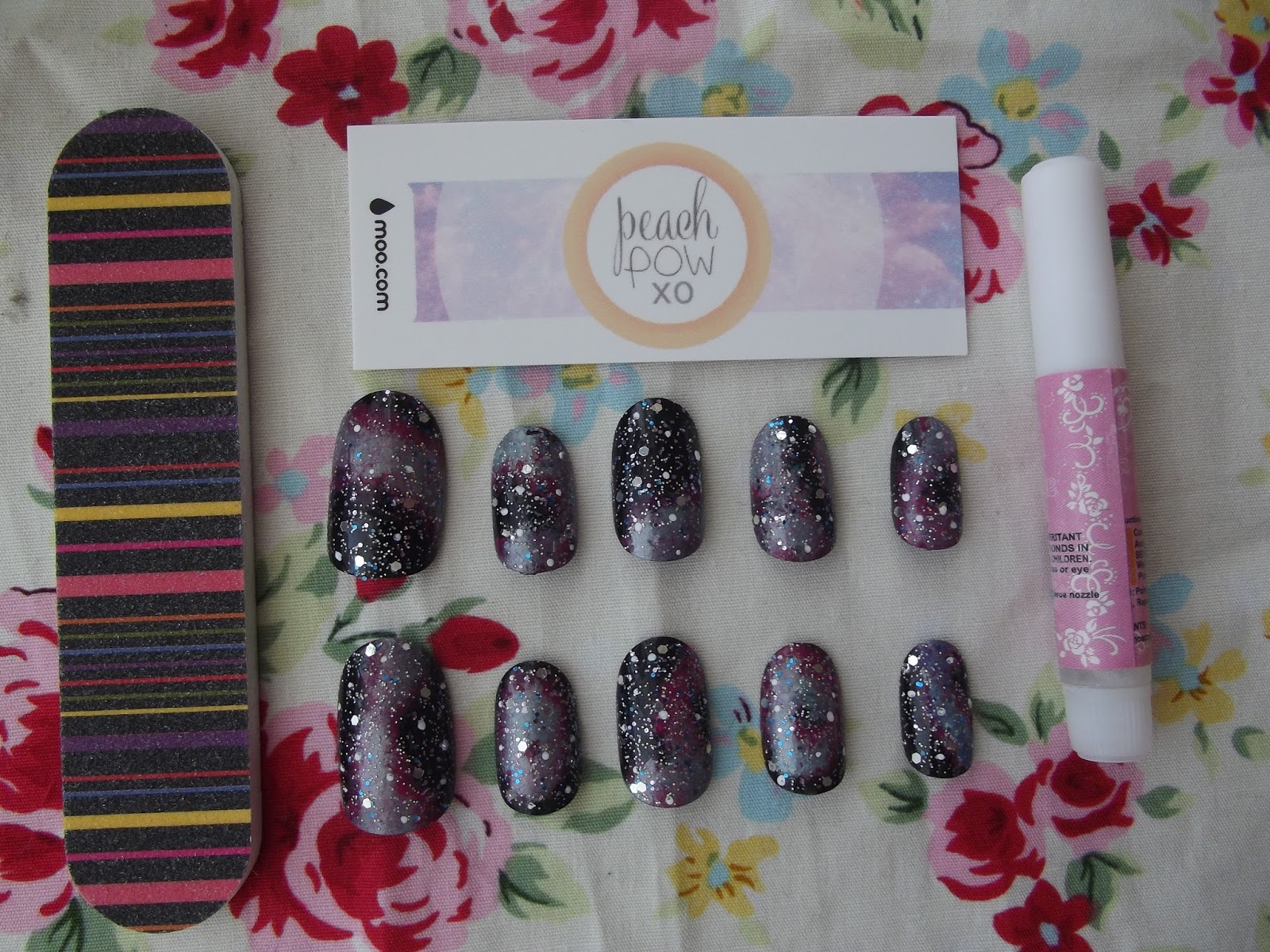
I was having a lovely clear out looking for more things to sell and I came across these. So I've popped a few of my hand painted false nails sets that I made earlier this year onto my Etsy page, which can be found here.

Pink Floral Cath Kidston Inspired

Red and Black Ombre with Gold Studs

Galaxy Nebula Print

Tie Dye Mermiad Ocean Nebula in Pink and Blue

Classic Black Pointed with Accent Spike Detail

All sets come in a set of 10, are hand painted using Models Own polishes and a clear top coat. They also come with a tube of nail glue and a small emery board.
To purchase or view, click here. Share with your friends!


Get Paid To Promote, Get Paid To Popup, Get Paid Display Banner